Veolia × Toray Technology: Shanghai Marathon Turns Plastic Bottles into Wearable Gear
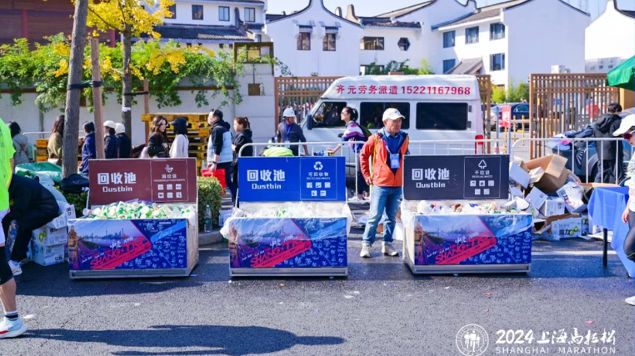
On the track of the Shanghai Marathon, who is undertaking a quiet "year-crossing" run? Is it the athletes striving forward, or... the cooling arm sleeves on their wrists? As it turns out, the plastic bottles left behind at the 2024 race have undergone a magnificent transformation through the co-creation and regeneration efforts of Veolia and Toray Technology. This year, they are no longer just consumables from the hydration stations but have been reborn as athletes' equipment, accompanying runners through the 42.195-kilometer journey and continuing their own "marathon" in a new form. This is not merely the rebirth of waste but a green, long-distance race of resource circulation.
— 1 —
An Eco-Relay Long in the Making
This circular journey began long before the starting gun fired. After the 2024 Shanghai Marathon concluded, tens of thousands of plastic bottles were sorted, collected, and transported to Veolia Huafei's plastic regeneration facility. Through processes like sorting, washing, melting, and pelletizing, they were transformed into high-quality recycled plastic pellets. Toray Technology then took up the baton, converting these pellets into 「&+」 fiber and weaving them into the arm sleeves worn by this year's participants. This collaboration across time and distance has turned environmental protection from a concept into a tangible, wearable experience.
— 2 —
Turning Plastic into Wearables: Unveiling the Technological Journey Behind the Cycle
What exactly does the journey from plastic bottle to sports arm sleeve entail? It is not magic performed at a single step but a systematic relay jointly run by Veolia and Toray. At Veolia Huafei's factory, plastic bottles are first sorted and baled, then undergo a dual-stage "cold wash—hot wash" to remove impurities. Following optical and manual sorting, they become high-purity fragments. These fragments are then melted, filtered, and cut into uniform recycled plastic pellets.
-
Baling the Plastic
Plastic bottles collected at the Shanghai Marathon site are categorized by source and material, then neatly baled and sent to the factory. -
Cold Wash and Sorting
The compressed bales enter the cold wash line for an initial "dusting," removing impurities like mud and grease. They then pass through automated optical sorters and manual sorting before being crushed into high-quality cold-washed flakes. -
Hot Wash and Sorting
After the "cold shower," the flakes take a "hot bath" on the hot wash line. Through high-temperature cleaning, precision sorting, and strict quality checks, they become high-purity, high-quality flakes. -
Melting and Pelletizing
The high-quality flakes are heated, solidified, and dissolved into a "melt." After filtration and cutting, they are transformed into evenly sized recycled plastic pellets.
At Toray's synthetic fiber factory, this recycling journey reaches a critical handoff. Veolia passes the recycled pellets to Toray, accelerating the transformation of plastic bottles as they sprint toward becoming arm sleeves for athletes. In Toray's weaving mill, through highly digitalized management and precise real-time control, the recycled fiber is woven into various high-value-added functional fabrics under strict raw material quality control and weaving tension management. These fabrics ultimately become the arm sleeves worn by Shanghai Marathon runners, providing a cool, breathable, and comfortable experience. Upholding its principle of integrity in operations, Toray employs a dual-assurance system of "internal control + external certification" to achieve full traceability from "one bottle to one yarn." This journey of metamorphosis from plastic bottle to arm sleeve is centered on carbon reduction and sustainability from start to finish.
— 3 —
Co-creating a Sustainable Future: A Marathon with No Finish Line
Year after year, from collection to regeneration, this green circular chain is gradually becoming a new tradition of the Shanghai Marathon. Every plastic bottle placed into recycling bins along this year's track will soon embark on its next journey, heading to Veolia's factories to await rebirth once again.
Hui Tong Increases Investment, Zhaoqing Zhongyin Phase II Project to Commence Production in 2026
HCpect Signs Agreement with Yueyang Municipal Government to Build Full Industrial Chain for Chemical Recycling of Waste Plastics
Related Article