Major Investment of 680 Million Yuan! Rizhao Sumao Large-Scale Waste Plastic Chemical Recycling Project Announced
Recently, the People's Government of Juxian County released the "Public Announcement on the Draft Environmental Impact Assessment Report for the Mixed Waste Plastic Chemical Recycling (PCR) Project (Phase I) of Rizhao Sumao Environmental Technology Co., Ltd.". Established on November 9, 2020, Rizhao Sumao Environmental Technology Co., Ltd. is wholly owned and controlled by Zhejiang Comy Environmental Technology Co., Ltd. (referred to as "Zhejiang Comy"). The company primarily utilizes chemical recycling technology to transform mixed waste plastics through processes such as oilification and olefinification into basic chemicals like pyrolysis oil and propylene, thereby achieving the resource recovery and high-value utilization of plastic waste.
1. Project Overview
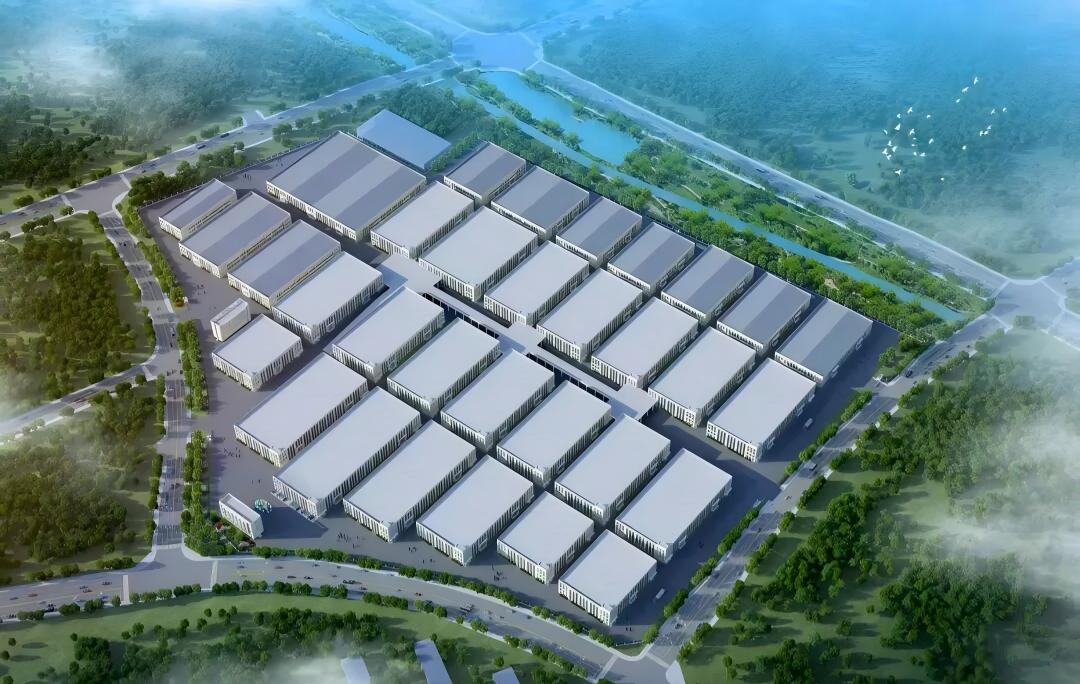
This project, the Mixed Waste Plastic Chemical Recycling (PCR) Project (Phase I) of Rizhao Sumao Environmental Technology Co., Ltd., is a new construction project. It is located in the Haiyou Chemical Industry Park in Rizhao, on the plot north of Fu'an Road and west of Tongda Road. With a total investment of 680 million yuan (CNY 680 million), the Phase I construction involves building one set of waste plastic chemical recycling (PCR) facilities. This primarily includes a 200,000 tons per annum (t/a) plastic-to-oil (PTO) unit, a 400,000 t/a plastic oil-to-olefins (OTO) unit, and a 200,000 t/a olefins recycling (ORR) unit. The production capacity is set for 180,375.4 t/a of polymer-grade propylene, with co-production of butane (22,520.8 t/a), propane (1,326 t/a), and light oil (123,521.3 t/a).
2. Comy's Core Technologies
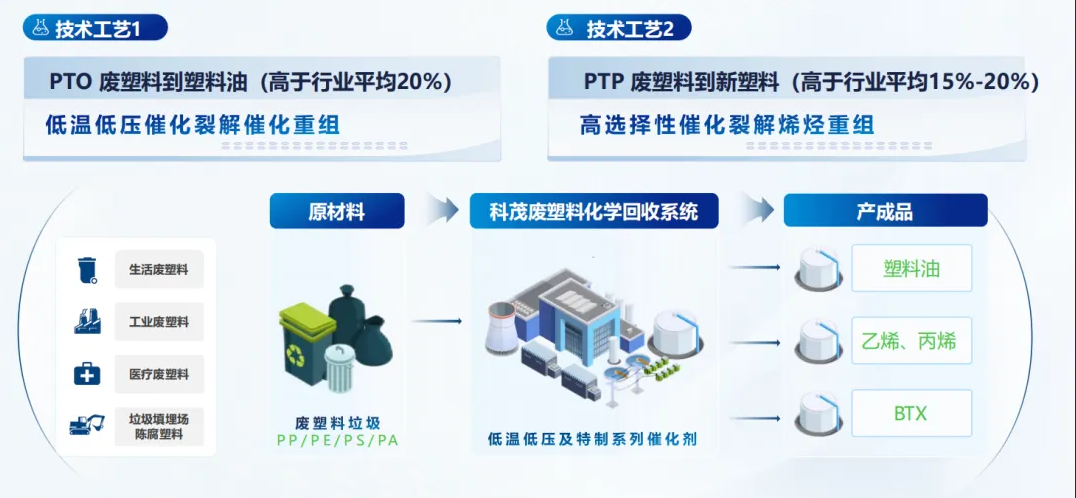
Comy possesses two major core proprietary technologies: "Low-Temperature Low-Pressure Catalytic Cracking and Catalytic Reforming (PTO)" and "High-Selectivity Catalytic Cracking and Olefin Reforming (PTP)".
- PTO Technology (Waste Plastic to Pyrolysis Oil): Using waste plastics like PP, PE, and PS as feedstock, this process employs low-temperature, low-pressure catalytic cracking combined with catalytic reforming, alongside customized catalysts. Its carbon-hydrogen utilization rate exceeds the industry average by 20%. The resulting pyrolysis oil can be sold to leading multinational chemical companies for producing recycled plastics, achieving a premium price.
- PTP Technology (Waste Plastic Directly to New Plastic): Utilizing high-selectivity catalytic cracking and olefin reforming technology, this process precisely controls reactions to directly produce key components for new plastics, such as ethylene, propylene, and BTX. Its carbon-hydrogen conversion efficiency is 15%-20% higher. This process does not rely on traditional petrochemical refining and can achieve a closed-loop full process within a single factory, offering superior industrial chain benefits.
3. Core Strategy and Industrial Layout
Comy's core strategy revolves around "Technology Licensing + Joint Venture Partnerships," continuously expanding the reach of its waste plastic chemical recycling business and building a collaborative matrix that spans both domestic and international markets.
-
Technology Licensing & International Project Delivery: Comy has secured China's first chemical recycling technology licensing deal, providing technical support to a NASDAQ-listed petrochemical company for a 40,000 t/a waste-plastic-to-oil project in Weifang, Shandong. Furthermore, it has achieved the first international export of a complete Chinese chemical recycling technology and package to a European multinational petrochemical giant, breaking the monopoly held by Western technologies, with construction expected to commence in early 2026.
-
Deepened Collaboration with Central SOEs: Comy is partnering with China National Chemical Engineering Group (CNCEC), a central state-owned enterprise, to jointly develop cutting-edge technologies, build a global supply chain for recycling plastic resources, and promote the establishment of a global "lighthouse factory" for producing new plastics from waste plastics.
-
Enabling Brand ESG Transformation & Circular Model Replication: Comy is assisting brand companies with their ESG transitions, having created a national benchmark for polypropylene chemical recycling by transforming discarded cosmetic packaging plastics from Shiseido into virgin-grade polypropylene resin for new packaging. This successfully demonstrates a complete loop from "waste plastic → new plastic → consumer product." This model is now being extended to other areas, such as automotive and ocean plastic recycling, further expanding the boundaries of the industrial ecosystem.
Coal Chemical Capacity Expansion Impacts the Plastic Recycling Market in China
China Resources Recycling Group Launches Six-Province, Eight-City Pilot to Build a "Meituan" "JD" Style Renewable Resource Platform
Related Article