Ad Rem Sorting Black Technology: Covering Automotive&Electronic Waste Plastic, Metal Recycling | ChinaReplis2025 Exhibitors' Style
2025-08-20
Against the backdrop of global resource scarcity and increasingly urgent environmental demands, the recycling industry has become a key force in promoting sustainable development. As a pioneer in the research and manufacturing of recycling equipment, Ad Rem is reshaping the future of waste resource utilization through technological innovation and deep industry cultivation.
— 1 —
A strong alliance of recycling technology pioneers
The birth of Ad Rem originated from the strategic collaboration between two industry powerhouses: European recycling giant Group Galloo injected decades of practical experience in recycling into it, while Valtech Group, which focuses on the recycling field, provides support with the technical accumulation of its 15 niche engineering companies, forming a dual core advantage of "practical experience+engineering innovation".
Based on this solid foundation, Ad Rem has established the mission of "leading the way through technological innovation to provide solutions for improving resource recovery rates from fragmented waste worldwide" and the vision of "consolidating the global recycling market position through technological innovation and providing long-term, high-quality sustainable solutions". Nowadays, this ambitious team has become a recognized technology leader in the industry, and ASR plastic recycling technology is a landmark achievement in fulfilling its mission.
— 2 —
Breakthrough ASR recycling bottleneck with technology
In Ad Rem's technology matrix, ASR plastic recycling technology can be regarded as a "disruptive innovation", facing the long-standing pain point of the industry: traditional recycling technology is difficult to accurately separate the complex and diverse plastic fragments in ASR, resulting in the long-term waste of these resources. And Ad Rem has completely solved this problem through the deep integration of materials science and engineering technology.
(1) Density Separation of Calcium Carbonate Media: A Separation Revolution Accurate to the "Micron Scale"
The calcium carbonate medium density separation technology developed by Ad Rem is the core breakthrough in ASR plastic recycling. Unlike traditional water-based flotation methods that can only roughly separate materials of different densities, this technology uses a water-based slurry containing suspended calcium carbonate particles as the medium. By precisely adjusting the slurry density, it can achieve the separation of plastics within an extremely narrow density range - an accuracy that traditional methods cannot achieve.
Specifically, the mixed plastics such as PP, PE, ABS, PS in ASR waste often have small density differences that are difficult to distinguish, while Ad Rem's technology can separate these plastics one by one like a "precision sieve" by controlling the density gradient of calcium carbonate slurry. The purity of the final recycled plastic fully meets the manufacturing standards for secondary raw materials, and can be directly reintroduced into the production cycle of automobiles and industrial manufacturing, truly achieving a closed-loop of "waste to resources".
(2) Challenging historical limitations: turning 'non recyclable' into 'high-value resources'
For a long time, plastics in ASR have been recognized by the industry as "low value or even worthless waste" due to their complex composition, severe pollution, and difficulty in separation, and most of them face the fate of landfill or incineration. And Ad Rem's technology completely breaks this limitation: through an efficient separation system, plastic fragments that were originally destined to be wasted are converted into high-purity recycled raw materials, not only reducing the total amount of waste, but also maximizing the utilization of every resource.
Data shows that this technology can increase the recycling rate of ASR plastics to a whole new height, directly helping recycling companies and the automotive industry reduce their environmental footprint - reducing landfill volume and CO ₂ emissions. At the same time, it responds to environmental regulations such as the EU ELV Directive (End of Life Vehicle Recycling Directive) and provides hardcore support for achieving circular economy goals.
Breakthrough ASR recycling bottleneck with technology
In Ad Rem's technology matrix, ASR plastic recycling technology can be regarded as a "disruptive innovation", facing the long-standing pain point of the industry: traditional recycling technology is difficult to accurately separate the complex and diverse plastic fragments in ASR, resulting in the long-term waste of these resources. And Ad Rem has completely solved this problem through the deep integration of materials science and engineering technology.
(1) Density Separation of Calcium Carbonate Media: A Separation Revolution Accurate to the "Micron Scale"
The calcium carbonate medium density separation technology developed by Ad Rem is the core breakthrough in ASR plastic recycling. Unlike traditional water-based flotation methods that can only roughly separate materials of different densities, this technology uses a water-based slurry containing suspended calcium carbonate particles as the medium. By precisely adjusting the slurry density, it can achieve the separation of plastics within an extremely narrow density range - an accuracy that traditional methods cannot achieve.
Specifically, the mixed plastics such as PP, PE, ABS, PS in ASR waste often have small density differences that are difficult to distinguish, while Ad Rem's technology can separate these plastics one by one like a "precision sieve" by controlling the density gradient of calcium carbonate slurry. The purity of the final recycled plastic fully meets the manufacturing standards for secondary raw materials, and can be directly reintroduced into the production cycle of automobiles and industrial manufacturing, truly achieving a closed-loop of "waste to resources".
(2) Challenging historical limitations: turning 'non recyclable' into 'high-value resources'
For a long time, plastics in ASR have been recognized by the industry as "low value or even worthless waste" due to their complex composition, severe pollution, and difficulty in separation, and most of them face the fate of landfill or incineration. And Ad Rem's technology completely breaks this limitation: through an efficient separation system, plastic fragments that were originally destined to be wasted are converted into high-purity recycled raw materials, not only reducing the total amount of waste, but also maximizing the utilization of every resource.
Data shows that this technology can increase the recycling rate of ASR plastics to a whole new height, directly helping recycling companies and the automotive industry reduce their environmental footprint - reducing landfill volume and CO ₂ emissions. At the same time, it responds to environmental regulations such as the EU ELV Directive (End of Life Vehicle Recycling Directive) and provides hardcore support for achieving circular economy goals.
— 3 —
Recycling solutions covering multiple scenarios
Based on the core technology of ASR plastic recycling, Ad Rem has built a recycling solution covering multiple scenarios, providing customized support for different types of waste disposal.
(1) ASR Plastic Separation System: The 'Core Engine' for Converting Waste into Raw Materials
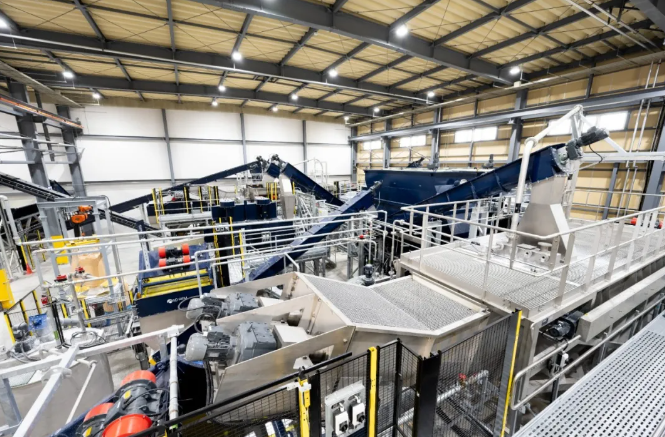
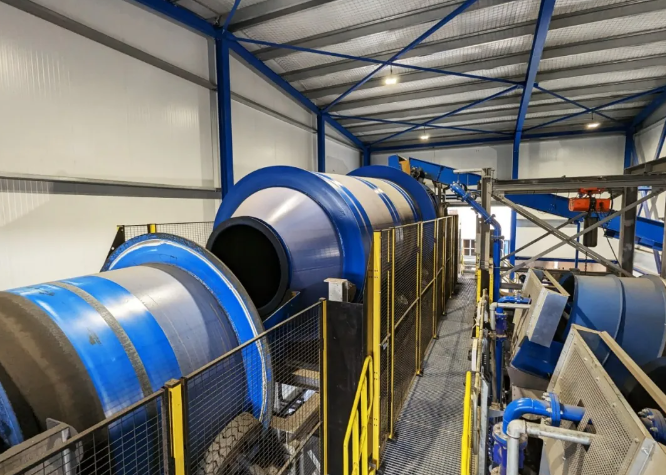
The ASR plastic separation system designed specifically for automotive debris is Ad Rem's signature product. It integrates calcium carbonate medium density separation technology and intelligent control module, which can accurately separate high-purity plastics such as PP, PE, ABS, PS from ASR waste with severe pollution and complex composition. The system adopts a modular design that can seamlessly integrate with existing crushing and post crushing production lines, allowing recycling enterprises to upgrade their ASR processing capabilities without the need for large-scale infrastructure upgrades, achieving "low-cost and efficient upgrades".
(2) Other core products: Strengthen the full chain capability of resource recycling
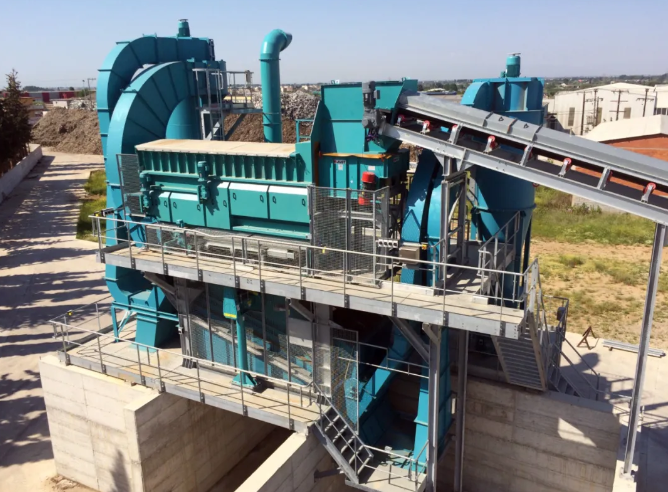
Scavenger Light Component Processing System: For crushing light component waste, it can accurately separate fine materials, fuel materials, and heavy materials into three categories, with a processing capacity of 5-50 tons/hour, suitable for crushing equipment with 1000-8000 horsepower, helping enterprises produce high value-added segmented materials and improve economic benefits.
Heavy medium separator: Focusing on metal recovery, optimized design through computational fluid dynamics, it can separate materials with a particle size of 4-200mm, with a processing capacity of 10-50 tons/hour, especially maximizing the recovery rate and purity of aluminum, achieving "high purity, high production capacity, and low medium consumption".
Electronic Waste (WEEE) Plastic Separation System: Extending the precise separation technology of ASR plastic recycling to the field of electronic waste, achieving efficient separation of plastic and metal, and enabling the full utilization of plastic resources in electronic waste.
— 4 —
Practice of "waste value-added" under global layout
Ad Rem's technology and products have been widely applied in the global market, with customers covering multiple regions and industries, and ASR plastic recycling technology has become the "key" to opening up the market.
Deep penetration in the core area:
Europe: With strict environmental regulations and advanced recycling infrastructure, it has become the core application market for ASR technology, helping enterprises meet requirements such as the EU ELV Directive;
North America: With the increasing demand for sustainable materials in the automotive industry, ASR plastic recycling systems help businesses convert waste into profit growth points;
Asia: The rapid development of manufacturing industry drives the demand for waste disposal, and ASR technology has become an important choice to improve resource recycling efficiency;
South America and the Middle East: Driven by sustainable development investments, gradually introducing ASR technology to optimize local waste management systems.
Value creation in key industries:
Plastic recycling enterprises: improve the purity of recycled plastics through ASR technology and enter the high-end manufacturing market;
Automobile recycling enterprises: break through the bottleneck of plastic recycling for scrapped vehicles and improve the overall recycling and utilization rate;
Industrial waste treatment enterprises: convert complex waste into standardized raw materials and expand revenue channels.
— 5 —
Technological iteration drives recycling and upgrading
The innovation of Ad Rem is still deepening, and the iterative upgrading of ASR plastic recycling technology is the core direction. Currently, its AI visual sorting technology, in collaboration with Covicon, a subsidiary of Valtech Group, is being integrated with ASR separation systems. Through AI driven image recognition, it can accurately locate hard plastics in complex waste materials, further improving separation efficiency and cleanliness.
In the future, Ad Rem will continue to optimize the accuracy and efficiency of calcium carbonate medium separation, and explore the possibility of plastic separation in a narrower density range; Simultaneously promoting the modularization and scaling of technology, allowing more small and medium-sized recycling enterprises to introduce ASR recycling technology at low cost, and transforming "non recyclable" waste into "high-value resources" globally.
From challenging the historical limitations of plastic recycling for scrapped vehicles to revitalizing waste with precision technology, Ad Rem is leveraging ASR plastic recycling technology as a pivot to reshape the value of the entire recycling industry. In the wave of circular economy, this groundbreaking technology not only solves environmental problems, but also shows the world that every 'waste' can be an undiscovered 'treasure'.
Coca Cola partners with Cirklo to build PET recycling plant, expected to start production in November
Global perspective: Building an intelligent purification system for the entire production process | Interview with Wang Wang 9
Related Article
Changhua Chemical Reports Progress in Low-Temperature Chemical Depolymerization of PET Waste
5.2 Billion Yuan Investment: Anhui Recycled Polyester Project to Commence Operation Post-Spring Festival