Formally put into operation! From laboratory to 200000 tons/year industrial demonstration, Huicheng Environmental Protection reconstructs the green recycling industry chain of waste plastics
author: CPRRA
2025-07-22
July 11, 2025, a milestone day that will surely be engraved in the history of plastic waste recycling! The trial production of the 200000 tons/year mixed waste plastic resource utilization demonstration project of Dongyue Chemical, a subsidiary of Huicheng Environmental Protection, has been successful, with a product yield of over 92%.
On July 19th, the project achieved the delivery of its first batch of products, marking the world's first large-scale chemical recycling project for mixed waste plastics using a "one-step" process. It has opened up the "last mile" of high-value utilization of low value waste plastics and fully completed the entire chain from raw materials to products. The "Huicheng Solution China Wisdom" provides a highly demonstrative value for solving the global plastic pollution problem and building a resource recycling system!
More than 400 million tons of plastic waste are generated globally every year, with China's plastic waste production reaching 62 million tons in 2023, but the recycling rate is less than 30%. Traditional physical recycling is difficult to solve the problem of mixed waste plastic pollution due to the bottleneck of "single material dependence" and "product degradation". Huicheng Environmental Protection CPDCC has broken the inherent perception of "high investment, low return" in the environmental protection industry with the triple shock wave of "technological disruption, cost reconstruction, and ecological innovation". It not only achieves high-value recycling of waste plastics, but also drives the development of green chemicals and provides a complete solution from technological breakthroughs to commercial implementation for the green transformation of the industry
1、To forge a sword, one must know its iron properties: Rooted in the pollution dilemma, tempered the foundation of the cycle
(1) The 'bottom line model' for pollution control
For mixed waste plastics that are difficult to physically recycle (such as agricultural film and household waste plastics), CPDCC technology focuses on "full material compatibility" and breaks through the industry deadlock of "sorting costs higher than raw material value". Through the full chain technology of "recycling pretreatment one-step cracking polymerization granulation plastic products", the indiscriminate utilization of waste plastics is achieved, completely eliminating pollution paths such as incineration and landfill.
(2) Breaking through industry bottlenecks and achieving high-value circulation
In traditional physical recycling, the performance of plastics gradually deteriorates, while CPDCC converts waste plastics into basic chemicals such as ethylene and propylene through catalytic cracking, and its polymerization product performance is consistent with that of native plastics, achieving a primary cycle of "film to film" and "bottle to bottle". Mixed waste plastics have transformed from an "environmental cancer" to a high value-added resource, breaking the vicious cycle of "low-end circulation".
2、Forging a sword requires sharpening the blade: Ten years of hard work, breakthrough in chemical cycle from 0 to 1
After nearly a decade, Huicheng Environmental Protection has broken through core technologies and achieved a leap from laboratory to 200000 tons/year industrial demonstration project with core advantages such as lower cost, higher yield, quality, and value. After the industrialization of CPDCC technology, it will completely overturn the form of the low value waste plastic resource utilization industry and fundamentally solve the problem of plastic pollution. This technology belongs to the international leading level and will fill the gap in the chemical recycling industry of waste plastics, solving the problem of global waste plastic management.
Image
Night view of Dongyue Chemical Cracking Unit
(1) Core technology breakthrough
(1) Total waste plastic sorting technology: A large amount of low value mixed waste plastic exists in the form of household waste, with serious pollution and complex composition. Huicheng has developed a centralized and mechanical sorting process and mode for mixed household waste and waste film, which is low-cost and efficient for sorting and recycling low value waste plastic, ensuring stable raw material sources.
(2) Continuous feeding system: Develop pneumatic solid phase conveying device to solve the problem of discontinuous high-temperature feeding of waste plastics, ensure the stability of feeding, and thus ensure long-term operation.
(3) Multi production olefin catalyst: Developing specialized and efficient catalysts, constructing micro mesoporous combined catalysts with high impurity tolerance and lower preparation costs, while ensuring reaction conversion rate and improving target product selectivity and high stability.
(4) Reverse flow reactor design: The specialized reverse flow reactor design ensures the energy required for the cracking of different molecules of waste plastics, which is beneficial for the high conversion of low-carbon olefins and also saves energy consumption.
(5) Efficient impurity removal technology: Due to the use of mixed waste plastics as raw materials, including PVC, aluminum-plastic composite plastics, etc., HCl capture technology and metal removal technology are used in the process to ensure stable operation of the device.
(2) The industrialization logic of cost restructuring
Raw material cost advantage: Mixed feeding eliminates the need for fine sorting and reduces raw material costs by over 40%;
Process efficiency improvement: The reaction temperature is controlled below 600 ℃, the reaction speed is fast, the product conversion rate is over 85%, the production energy consumption is low, and the pollutant emissions are minimal.
Low yield and high investment value: A demonstration project with a single unit capacity of 200000 tons/year and an investment of 1.5 billion yuan. Compared with other units of the same scale, the investment cost is low, and the product is low-carbon olefin. Compared with thermal cracking oil, it has higher value.
After the completion of the 200000 ton/year demonstration project, it will drive the upstream and downstream industrial chain to add more than 5 billion yuan in value, forming a complete ecosystem of "recycling treatment high-value application".
(3) Reshaping the Global Plastic Governance Ecological Environment
Through technologies such as thermal cracking and catalytic depolymerization, mixed waste plastics are converted into basic chemical raw materials such as monomers, achieving an industrial transformation from a "linear economy" to a "closed-loop cycle". It will become one of the core paths for plastic pollution control and achieving carbon neutrality goals, promoting the green and sustainable development of household waste management and green chemical industry, and further promoting the reform of the global plastic governance system.
3、Casting a sword as a shining edge: A 200000 ton project has been launched, shaking the industry landscape
(1) The leap from laboratory to industrialization
On May 20, 2025, the world's first 200000 tons/year CPDCC project held a production oath ceremony, marking the countdown to the project's full completion and production. After the project is put into operation, it can produce ISCC PLUS certified liquefied plastic cracking gas (LPCG) and plastic cracking light oil (PCLO), breaking through the series of problems in the existing plastic thermal cracking oil production, such as low feed and product yield, and high coke yield.
(2) Stable supply chain of green rPP and rPE
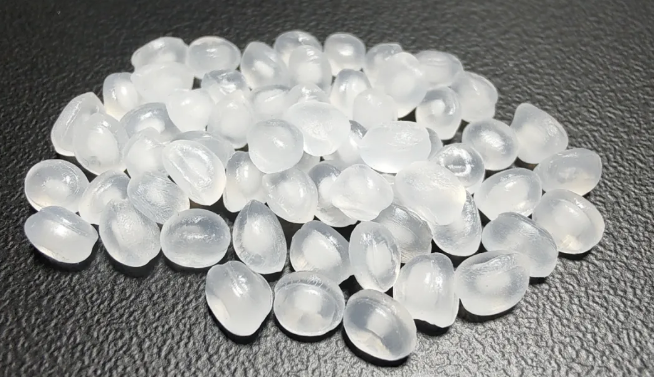
The LPCG and PCLO produced by the cracking of waste plastics enter the petrochemical plant, which can produce approximately 190000 tons of rPP and rPE with performance consistent with primary grade, meeting the quality requirements of food and pharmaceutical product packaging. It will provide green and high-quality rPP and rPE raw materials for global brands and others.
(3) Dual benefits of economy and environment
Carbon reduction benefits: If 20% of the country's plastic waste adopts CPDCC technology, it can reduce CO ₂ emissions by over 50 million tons annually and save 30 million tons of oil;
Industrial Value added: The project drives the value added of the upstream and downstream industrial chains to over one trillion yuan, forming a value transformation from "white pollution to white oil fields".
4、The final discourse on the world of swordsmanship: From technical benchmark to national industrial chain layout
(1) Raw Material Revolution: From "Picking and Selecting" to "Collecting All Orders"
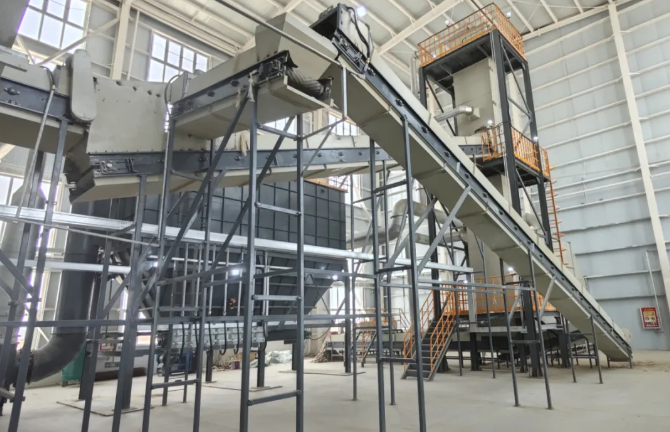
Waste plastic film recycling chain: A "white pollution" control circular industry chain has been established in Xinjiang, which includes "agricultural film production residual film recycling membrane residue separation residual film dry cleaning and purification secondary granulation/waste plastic cracking to produce chemical raw materials", dedicated to the recycling of agricultural residual film, waste plastic pollution control, and high-value utilization. Domestic Waste Resource Recycling Center: Based on the existing infrastructure construction of domestic waste disposal points, transfer stations, etc. in the environmental sanitation system, it adopts processes such as "crushing screening air selection cleaning impurity removal dehydration" to carry out centralized mechanized sorting of domestic waste, realizing the recycling of low value plastics and other renewable resources.
(2) Industrial leap: from "low-quality and low-priced sales" to "high-end intelligent manufacturing"
Through molecular level reconstruction technology, the product performance is consistent with the raw material, breaking through the dilemma of physical recycling product performance degradation and low quality and low price of products. Recycled PE/PP meets the standards of food contact materials, helping to achieve 100% replacement of recycled plastics.
(3) Ecological Collaboration: From "Technology Island" to "Industrial Collaboration"
Drive the value reconstruction of the industrial chain through innovation, and achieve the coordinated development of the "upstream recycling midstream cracking and chemical downstream new materials" industry:
Upstream: Reform the environmental sanitation system, promote the upgrading of the household waste industry, build a cascade utilization system dominated by resource utilization and assisted by energy utilization, and achieve waste reduction, pollution reduction, carbon reduction, and resource recycling;
Midstream: Collaborate with petrochemical companies and others to establish a "waste plastic olefin new material" chain, achieving closed-loop resource utilization;
Downstream: Recycled plastics, with the same quality and safety as virgin plastics, can replace virgin plastics in fields such as food, daily chemical products, and automobiles, reducing product carbon footprint and winning market recognition, promoting the green transformation of the consumer end.
5、Sword requires breaking through obstacles: Industrialization challenges and breakthrough paths
In the process from industrial demonstration to industrial promotion, there will still be many complex and severe challenges.
On the technical level, although CPDCC technology has achieved numerous breakthrough results, a large amount of human, financial, and resource investment is still needed for R&D iteration and industrial upgrading in the implementation of larger scale industrialization and coordinated development of the industrial chain.
In terms of policies, one is the policy guarantee for the recycling of waste plastics. The second is the chemical recycling of waste plastics as recycled materials, which is supported by a series of industry/national standards such as industry positioning, product standards, taxation, and application in high standard fields such as food packaging, to promote the orderly and standardized development of the waste plastic chemical recycling industry.
In the process from industrial demonstration to industrial promotion, there will still be many complex and severe challenges.
On the technical level, although CPDCC technology has achieved numerous breakthrough results, a large amount of human, financial, and resource investment is still needed for R&D iteration and industrial upgrading in the implementation of larger scale industrialization and coordinated development of the industrial chain.
In terms of policies, one is the policy guarantee for the recycling of waste plastics. The second is the chemical recycling of waste plastics as recycled materials, which is supported by a series of industry/national standards such as industry positioning, product standards, taxation, and application in high standard fields such as food packaging, to promote the orderly and standardized development of the waste plastic chemical recycling industry.
6、Using a sword as a pen, write about the new world of plastic recycling
Huicheng is building a new paradigm in the field of waste plastic recycling with the persistence of forging swords, the tenacity of sharpening swords, the courage of shining swords, and the pattern of discussing swords. The "Heaven Reliant Sword" of CPDCC not only splits apart the pollution dilemma, but also creates a new future of harmonious coexistence between humans and plastics. In the future, Huicheng will continue to uphold the concept of innovation driven and green development, continuously improve CPDCC technology, and accelerate the national industrial layout. The chemical recycling of waste plastics will gradually reduce dependence on non renewable resources such as oil, truly realizing the green vision of "full recycling and low emissions", and contributing Chinese wisdom and solutions to global plastic pollution control and sustainable development.
In the future, with the iteration of technology and the expansion of industries, this green transformation that began in eastern Guangdong may reshape the future landscape of coexistence between humans and plastics.
Huicheng is building a new paradigm in the field of waste plastic recycling with the persistence of forging swords, the tenacity of sharpening swords, the courage of shining swords, and the pattern of discussing swords. The "Heaven Reliant Sword" of CPDCC not only splits apart the pollution dilemma, but also creates a new future of harmonious coexistence between humans and plastics. In the future, Huicheng will continue to uphold the concept of innovation driven and green development, continuously improve CPDCC technology, and accelerate the national industrial layout. The chemical recycling of waste plastics will gradually reduce dependence on non renewable resources such as oil, truly realizing the green vision of "full recycling and low emissions", and contributing Chinese wisdom and solutions to global plastic pollution control and sustainable development.
In the future, with the iteration of technology and the expansion of industries, this green transformation that began in eastern Guangdong may reshape the future landscape of coexistence between humans and plastics.
APEC Conference on Recycled Plastics for Food Contact Held in Beijing to Discuss Policy Standards and Practice Paths
Do high proportion recycled products need to be popular? ChinaReplas2025: Technical Strength+Brand Exposure, Ningbo in September
Related Article
Changhua Chemical Reports Progress in Low-Temperature Chemical Depolymerization of PET Waste
5.2 Billion Yuan Investment: Anhui Recycled Polyester Project to Commence Operation Post-Spring Festival